
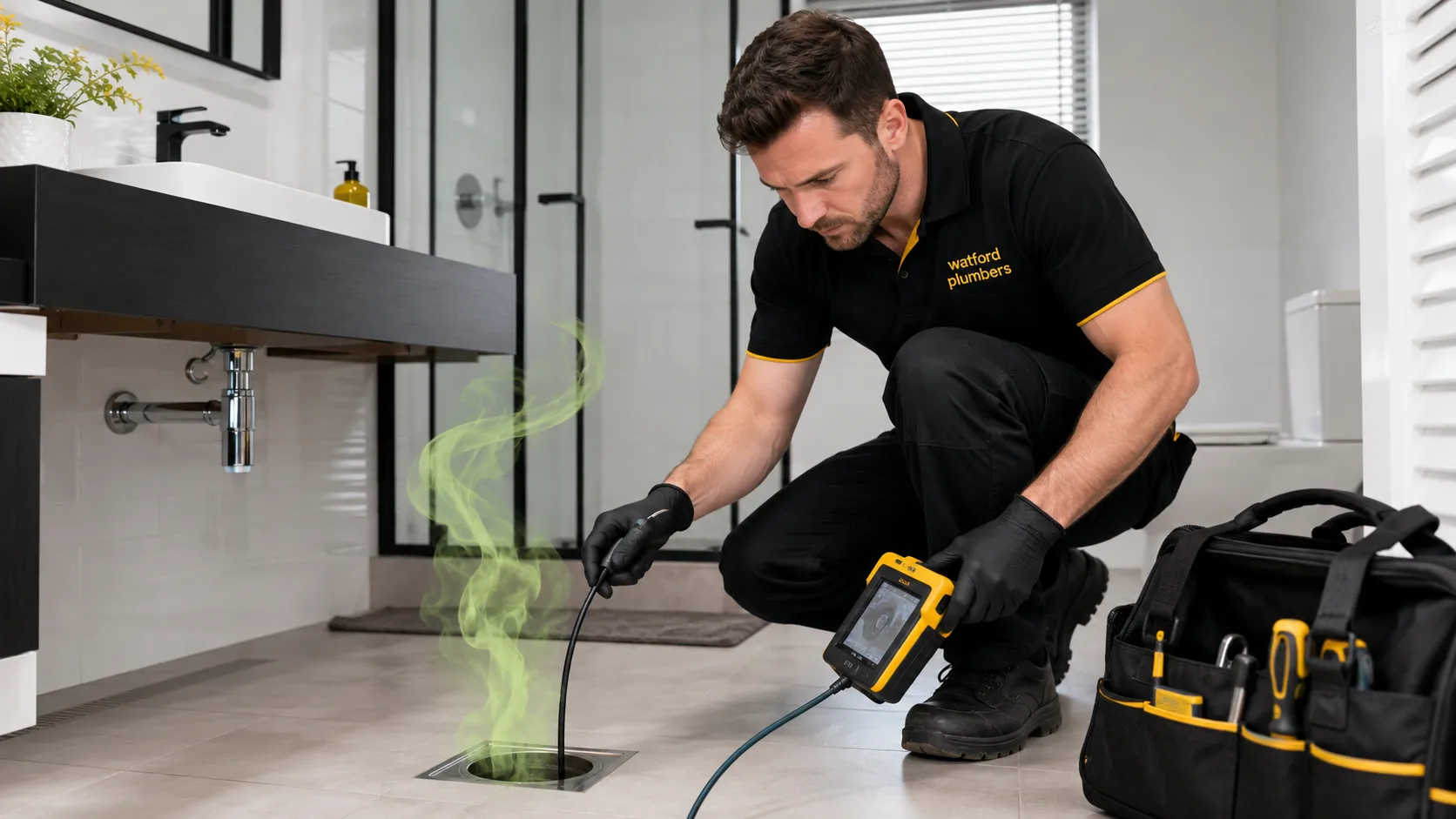
A homeowner in a 1930s semi in Oxhey, WD19, started hearing a loud banging sound every time the heating kicked in, like a kettle left boiling behind the airing cupboard door. After weeks of ignoring it, the noise got worse, and a routine service revealed early damage to the heat exchanger that could have been avoided months earlier.
Watford Plumbers & Heating Engineers hears about boiler banging noises constantly, and in the vast majority of cases the cause is straightforward and preventable. Knowing what your boiler is telling you helps you act before a noise becomes an expensive repair.
This guide explains what different boiler noises usually mean, what causes the banging specifically, and when the noise means it is time to call an engineer.
Quick Answer
|
Featured Snippet -- Direct Answer |
|
A banging noise from your boiler is usually kettling, caused by limescale restricting water flow through the heat exchanger, which creates trapped steam pockets that pop as they collapse. It sounds alarming but is rarely an immediate danger. Book a descale or power flush soon to prevent heat exchanger damage. |
What Different Boiler Noises Usually Mean
Boilers make several distinct noises, and each one usually points to a different cause. A loud banging or knocking sound, especially one that starts as soon as the heating fires up, is almost always kettling. A whistling or screeching sound suggests restricted water flow somewhere in the system. Gurgling points to trapped air, while a humming or vibrating sound often means a failing pump. A gentle ticking as the boiler heats up and cools down is usually just normal thermal expansion of the pipework and rarely needs any action.
|
Sound |
Likely Cause |
Action |
|
Banging/knocking, worse when heating fires |
Kettling -- limescale in heat exchanger |
Book a descale or power flush |
|
Whistling or screeching |
Restricted water flow |
Check pressure, book a service |
|
Gurgling |
Air trapped in the system |
Bleed radiators, recheck pressure |
|
Humming or vibrating, continues after heating stops |
Failing pump |
Call an engineer |
|
Gentle ticking as it heats or cools |
Normal thermal expansion |
Usually no action needed |
|
Loud bang in pipes when a tap is turned off |
Water hammer -- not the boiler itself |
See our water hammer guide |
Kettling: The Most Common Cause of Boiler Banging Noise
Kettling gets its name because the sound genuinely resembles a kettle coming to the boil, and the cause is remarkably similar too. Inside your boiler's heat exchanger, water passes through narrow metal passages that get heated rapidly. When limescale builds up inside these passages, from Watford's hard water supply, it restricts flow and creates localised hot spots where water briefly turns to steam. As these steam pockets collapse against the surrounding water, they create the banging or rumbling sound you hear.
This is a gradual process, which is why kettling tends to start quietly and get louder over weeks or months as more limescale accumulates. Watford sits in one of the UK's hardest water areas, and boilers here without a scale reducer fitted are far more prone to kettling than in softer-water parts of the country, particularly in Victorian and Edwardian properties in Nascot Wood where the system has never been power flushed.

Kettling usually follows a recognisable pattern: a faint tapping or popping sound in the early stages, growing into a louder, more persistent banging over several weeks or months as more limescale accumulates inside the heat exchanger. Catching it in this early, quieter phase is when a simple descale is most effective and least expensive, rather than waiting for the noise to become impossible to ignore.
The heat exchanger itself is one of the more expensive individual components inside a boiler, and manufacturers generally do not consider gradual limescale damage to be covered under warranty, since it is considered a maintenance issue rather than a manufacturing fault. This is one of the clearest financial reasons to address kettling early rather than waiting for a full breakdown.
Older boilers in Watford homes that have never had a scale reducer fitted are particularly at risk, since every year of exposure to hard water without any protective treatment adds to the limescale layer inside the heat exchanger. If your boiler is more than five years old and has never been power flushed, it is worth asking your engineer to check for early kettling even if the noise has not started yet.
Other Causes of a Banging Boiler
Air trapped in the central heating system can also cause banging or gurgling noises, particularly from radiators rather than the boiler unit itself, and is usually resolved by bleeding the affected radiators and checking system pressure afterwards.
A failing pump tends to produce more of a continuous humming, buzzing, or vibrating noise rather than a sharp bang, and this is a component that needs professional replacement rather than a DIY fix. A failing pump can sometimes be identified without opening the boiler casing: listen for the noise continuing even briefly after the heating has switched off, since a healthy pump only runs while the system calls for heat.
A gentle ticking or tapping sound as pipework expands and contracts while heating up or cooling down is completely normal in most systems and is not something to worry about on its own.
If you hear a loud bang specifically in your pipes at the moment you turn a tap off, rather than from the boiler itself, this is a different issue called water hammer, caused by a sudden pressure surge rather than anything happening inside the boiler. Our guide to water hammer and banging pipes covers this specific cause separately, since the fix is different.
Is a Banging Boiler Dangerous?
Kettling itself is not an immediate safety emergency in the way a gas leak or carbon monoxide alarm would be, and you do not need to evacuate or switch off the boiler in a panic. However, ignoring it is a genuine mistake. The repeated localised overheating that causes kettling can eventually crack the heat exchanger, leading to a leak inside the boiler and a repair bill considerably larger than a routine descale would have cost.
|
Warning |
|
If the banging is accompanied by a burning smell, visible soot around the boiler casing, or a flame that looks yellow rather than blue, treat this as a more serious issue and call a Gas Safe engineer immediately rather than waiting, since these signs point to a combustion problem rather than simple kettling. |
What to Check Before Calling an Engineer
Check your boiler pressure gauge first, since very low or high pressure can sometimes contribute to unusual noises alongside kettling. To check it, look for a reading between 1.0 and 1.5 bar on a cold system. If it reads significantly outside this range alongside the banging noise, mention both details to your engineer.
Note whether the banging happens every single time the heating fires up, which points strongly to kettling, or only occasionally, which might suggest air or a pump issue instead. Check when your boiler was last serviced or power flushed, since a system untouched for several years in Watford's hard water area is the most likely candidate for kettling.

If you suspect trapped air, bleeding a radiator is straightforward: use a radiator key to slowly open the small valve at the top corner until water rather than air starts to escape, then close it firmly. Do this on any radiator that feels cooler at the top than the bottom, and check your boiler pressure afterwards, since bleeding radiators can lower it slightly.
When to Call a Gas Safe Engineer
Call a Gas Safe engineer if the noise is getting louder over time, if you notice any of the warning signs mentioned above, such as smell or soot, or if your boiler has never had a power flush and is more than a few years old. Descaling the heat exchanger and flushing the system are not safe or effective DIY jobs, since they involve dismantling parts of the boiler and handling descaling chemicals correctly.
How to Stop Boiler Banging Noise for Good
A power flush clears accumulated limescale and sludge from the heat exchanger, radiators, and pipework throughout the entire system, not just the boiler itself, and is the standard fix for established kettling.
For a newly installed or recently serviced boiler in a hard water area like Watford, fitting a scale reducer, a small device that treats mains water before it reaches the boiler, helps prevent kettling from developing in the first place. A water softener fitted at the point where mains water enters your Watford home treats every appliance in the property, not just the boiler, and is worth considering if you are also dealing with limescale on taps, shower heads, or kettles elsewhere in the house. A scale reducer fitted specifically to the boiler's supply pipe is a more targeted, lower-cost option if the boiler is your only real concern.
Booking an annual boiler service catches early limescale build-up before it progresses to noticeable kettling, and is considerably cheaper than a full power flush or, worse, a damaged heat exchanger needing replacement. If kettling has already started, do not wait for it to become a full breakdown before booking a descale.
Conclusion
A banging boiler is rarely a genuine emergency, but it is also never something worth ignoring indefinitely. Watford's hard water makes kettling one of the most common heating faults we see, and it is also one of the most preventable with a routine descale or scale reducer fitted early.
If your boiler has started banging and you are not sure whether it needs a service or something more urgent, Watford Plumbers & Heating Engineers can diagnose the exact cause and recommend the right fix.
|
Get Help |
|
Boiler banging or making strange noises? Call Watford Plumbers & Heating Engineers on 07425 281 744 for a diagnosis and descale across WD17 to WD25. |
Frequently Asked Questions
Is a banging boiler dangerous?
Kettling itself is rarely an immediate danger and does not mean you need to switch off the boiler in a panic. However, ignoring it can eventually crack the heat exchanger. If banging comes with a burning smell, soot, or a yellow flame, treat it as urgent and call a Gas Safe engineer straight away.
What is kettling in a boiler?
Kettling is a banging or rumbling noise caused by limescale restricting water flow inside the heat exchanger, creating trapped steam pockets that collapse and produce sound similar to a boiling kettle. It develops gradually and is especially common in hard water areas like Watford without a fitted scale reducer.
Can I fix a noisy boiler myself?
Some causes, like trapped air, can be fixed yourself by bleeding radiators and checking pressure. Kettling itself cannot be fixed safely as a DIY job, since descaling the heat exchanger and power flushing the system require professional tools and Gas Safe registration to carry out correctly.
Will a power flush stop my boiler banging?
Yes, a power flush clears the limescale and sludge from the heat exchanger, radiators, and pipework that causes kettling, and is the standard fix for established cases. Fitting a scale reducer afterwards helps prevent the same limescale build-up from returning in Watford's hard water area.
Why is my boiler banging only when heating comes on?
This pattern strongly points to kettling, since the noise is caused by water heating rapidly through limescale-restricted passages in the heat exchanger. If the banging only happens during the heating cycle and stops once it ends, book a descale or power flush rather than waiting for it to worsen.
