
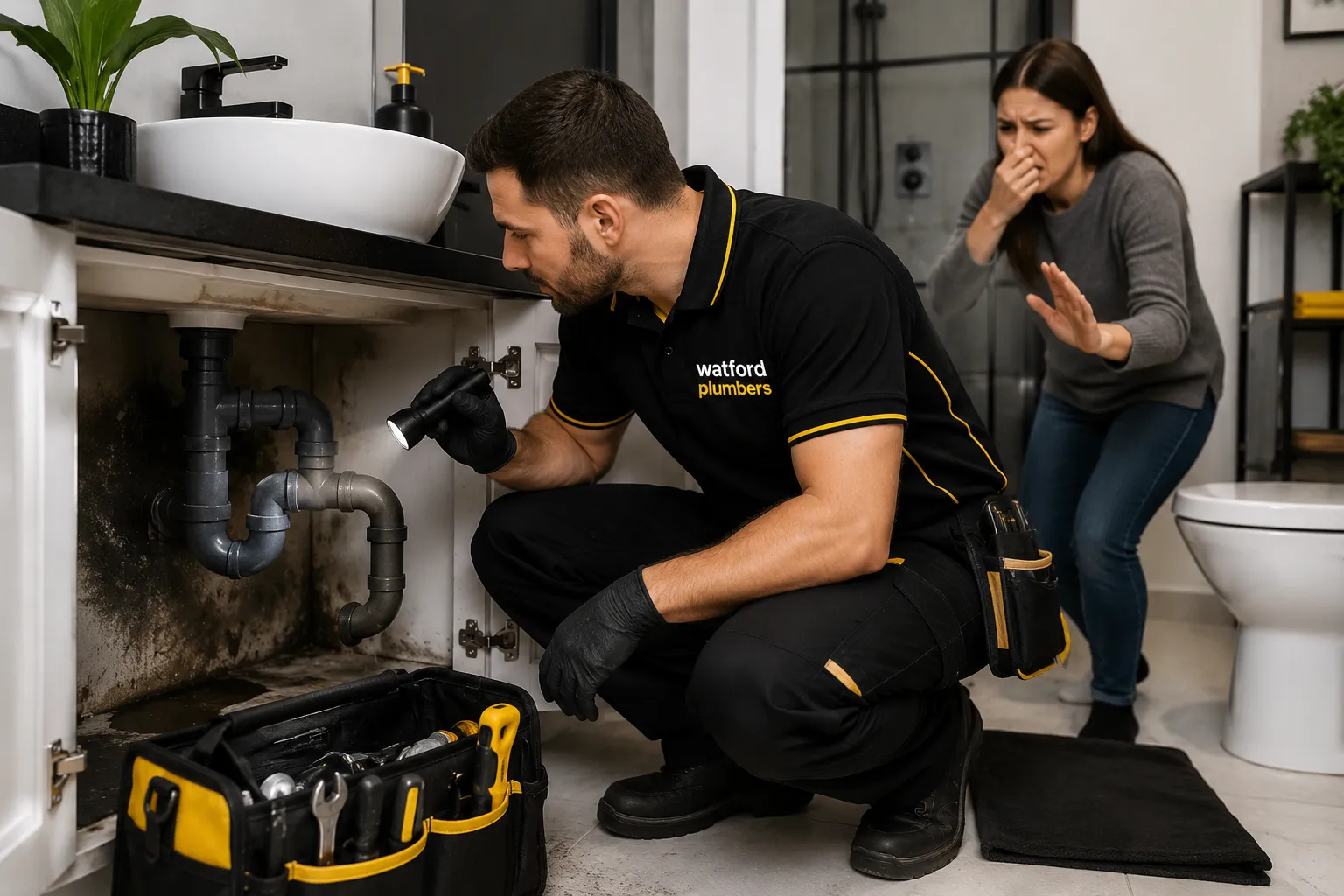
A homeowner in an Edwardian conversion flat in central Watford, WD17, returned from a two-week holiday to a strong sewage smell filling the hallway, even though nothing appeared blocked or broken anywhere in the flat. Before booking an expensive specialist drainage survey, a quick check of the guest bathroom solved the mystery.
Watford Plumbers & Heating Engineers gets calls about sewage smells more often than most people expect, and the cause is rarely as serious as it first seems. Most cases trace back to one simple, fixable issue rather than a hidden problem in the sewer itself.
This guide explains what actually causes a sewage smell at home, what you can check yourself, and when the problem genuinely needs a plumber.
Quick Answer
|
Featured Snippet -- Direct Answer |
|
A sewage smell at home is usually caused by a dry drain trap, most often in an unused bathroom or floor drain, letting sewer gas rise back into the room. Run water down any unused drains for a minute. If the smell persists, a damaged toilet seal or blocked vent pipe may be the cause. |
Is That Smell Really Sewage? Recognising the Signs
A genuine sewage smell has a distinctive sulphurous, rotten egg quality, different from damp, mould, or food waste odours, which tend to smell earthier or sourer rather than sharply chemical. It is usually strongest near a specific drain, toilet, or plughole rather than spread evenly through a room, and it often comes and goes rather than staying constant.
An intermittent smell that appears after a period away, or in a bathroom or utility room that gets little use, points strongly towards one specific and very common cause covered below. A constant smell throughout the property, or one that worsens after heavy rain, suggests something different and is worth reading through carefully.

A smell that seems to follow you from room to room, or is genuinely difficult to pin to one drain, is more likely a vent pipe issue affecting several traps at once, while a smell tied firmly to one specific plughole or the base of one toilet points to a single dry trap or seal in that exact location.
What Causes a Sewage Smell in a Watford Home
|
Symptom |
Likely Cause |
Action |
|
Smell in one unused bathroom for weeks |
Dry P-trap |
DIY -- run water |
|
Smell near toilet base, toilet feels loose |
Failed wax ring seal |
Call an engineer |
|
Smell with gurgling drains |
Blocked or damaged vent pipe |
Call an engineer |
|
Smell near washing machine or dishwasher |
Dry trap in appliance drain hose |
DIY -- run appliance or pour water |
|
Smell across whole property after heavy rain |
External public sewer issue |
Report to Thames Water |
|
Smell from a garage or basement floor drain |
Dry trap, rarely used |
DIY -- top up with water |
Every sink, shower, bath, and floor drain in your home has a P-trap, a curved section of pipe that holds a small amount of water at all times. This water acts as a seal, physically blocking sewer gas from rising back up through the pipe into your room. When a drain goes unused for a couple of weeks, that water evaporates, and the seal is lost, which is exactly what happened in the Watford flat above.
Washing machines and dishwashers have their own small trap in the drain hose or standpipe, and these can dry out in exactly the same way as a sink or floor drain if the appliance goes unused for an extended period, such as during a long holiday or between tenants in a rental property.
A failed wax ring seal at the base of a toilet is another common cause, and it often comes with a second clue: the toilet feels slightly loose or rocks when you sit down. This seal can dry out, crack, or shift over time, particularly on an older toilet that has never been reset.
A blocked or damaged vent pipe, the pipe that runs from your drainage system up through the roof, is a less obvious cause but a real one. This pipe allows air to enter the system safely, and without it, water draining away can create enough negative pressure to siphon the water straight out of nearby traps, causing the same gas leak effect in several rooms at once.
The gurgling sound linked to a vent pipe problem happens because trapped air, unable to escape safely through a blocked vent, forces its way back through the water in your traps as you drain a bath or flush a toilet elsewhere in the house. Hearing this alongside a sewage smell is a stronger signal of a vent issue than the smell alone.
Victorian and Edwardian properties in Nascot Wood and central Watford often still have original cast iron soil stacks, and these corrode internally over decades in a way modern uPVC pipework does not, making an ageing, unmaintained system more likely to develop a genuine leak point rather than a simple dry trap.
Basement conversions and downstairs cloakrooms added to older Watford properties sometimes rely on a macerator unit rather than a standard gravity drain, and these have their own internal seals and traps that can dry out or fail independently of the rest of the house's plumbing, so check any macerator-fed toilet or basin separately if the smell seems localised there.
Quick Fixes You Can Try Yourself
Run water for about a minute in every sink, shower, bath, and floor drain in your home, particularly any in rooms you rarely use, such as a guest bathroom or utility room. This refills any dry P-traps and is by far the most common fix, often resolving the smell within minutes.
Check whether your toilet feels stable when you sit on it. A wobble suggests the wax seal beneath it has failed and needs replacing, which is a straightforward job for a plumber but not something to leave unaddressed, since a failed seal can also allow water damage to the floor beneath.

Pour a cup of water into any floor drains in a garage, utility room, or basement, since these are the traps most likely to dry out completely between uses. Finally, check any outdoor drain covers or gullies near the property for obvious blockages or debris, since a partially blocked gully can sometimes push a faint sewage smell back towards the house.
Is Sewer Gas Dangerous? What to Know
Sewer gas is mostly hydrogen sulphide, the same compound responsible for the rotten egg smell, and brief exposure at typical household levels is unpleasant rather than dangerous. Prolonged exposure in a poorly ventilated space, such as a basement or enclosed utility room, can cause headaches, nausea, or irritation to the eyes and throat, and is worth taking seriously rather than simply masking with air freshener.
If a sewage smell persists in an enclosed space, open windows to ventilate the area and avoid spending long periods there until the source is fixed. HSE publishes general guidance on confined spaces and gas hazards for anyone wanting more detail on sewer gas exposure and ventilation in enclosed or below-ground rooms, which is worth a read if your property has a basement or converted cellar room affected by a persistent smell.
When to Call a Plumber Instead of DIY
Call a plumber if running water through unused drains does not resolve the smell within a day, if your toilet feels loose or unstable, or if you notice gurgling sounds from drains alongside the smell, which suggests a vent pipe or blockage issue rather than a simple dry trap.
Replacing a wax ring seal is a relatively quick job for a plumbing engineer, involving lifting the toilet, fitting a new seal, and resetting it securely. It is not usually a job worth attempting without experience, since an incorrectly fitted seal can cause a leak at the base of the toilet that is worse than the original smell.
A smell that appears across the whole property after heavy rain, rather than from one specific room, often points to an issue with the public sewer rather than your own pipework. Thames Water is responsible for the shared sewer network beyond your property boundary, and problems here should be reported to them directly rather than tackled as a private plumbing job.
If you rent your Watford property and a persistent sewage smell does not resolve after running water through the drains, report it to your landlord in writing, since a vent pipe blockage or damaged seal affecting the wider drainage system is generally their responsibility to fix rather than yours.
How to Stop Sewage Smells Coming Back
Preventing sewage smells from returning is mostly about routine, not repairs. Run water through any rarely used drain, guest bathroom, or floor drain at least once a month to keep every P-trap topped up. Check that your roof vent pipe is not blocked by leaves, moss, or a bird's nest, particularly after autumn, and book an annual drain check if your Watford property has original Victorian or Edwardian pipework that has never been inspected.
Conclusion
Most sewage smells in Watford homes come down to a dry trap or a failing seal rather than anything more serious, and a few minutes running water through unused drains solves the majority of cases without needing a callout at all. Knowing the difference between a quick DIY fix and a genuine drainage fault saves time, money, and unnecessary worry.
If you have run water through every drain and the smell has not gone, or you suspect a vent pipe or sewer issue, Watford Plumbers & Heating Engineers can diagnose and fix the cause quickly.
|
Get Help |
|
Sewage smell that won't go away? Call Watford Plumbers & Heating Engineers on 07425 281 744 for a fast diagnosis and fix across WD17 to WD25. |
Frequently Asked Questions
Why does my bathroom smell like sewage sometimes?
This is almost always caused by a dry P-trap, the curved section of pipe under a sink, shower, or floor drain that normally holds water to block sewer gas. If the bathroom is used rarely, that water evaporates over time. Running water through the drain for a minute usually fixes it.
Is sewer gas smell dangerous to breathe?
Brief exposure at typical household levels is unpleasant rather than dangerous. Prolonged exposure in an enclosed, poorly ventilated space, such as a basement, can cause headaches, nausea, or throat irritation. Ventilate the area and fix the source rather than relying on air freshener to mask it.
How do I fix a dry P-trap?
Run water down the affected sink, shower, bath, or floor drain for about a minute to refill the trap and restore the water seal. This is the most common fix for a sewage smell and usually works within minutes for drains that simply have not been used recently.
Why does my house smell of sewage after rain?
A smell that appears across the whole property after heavy rain, rather than from one specific drain, often points to an issue with the public sewer network rather than your own pipework. Report this to Thames Water directly, since they are responsible for the shared sewer beyond your boundary.
When should I call a plumber for a sewage smell?
Call a plumber if running water through unused drains does not resolve the smell within a day, if your toilet feels loose or unstable, or if gurgling sounds accompany the smell, since these point to a failed seal or vent pipe issue rather than a simple dry trap.
