
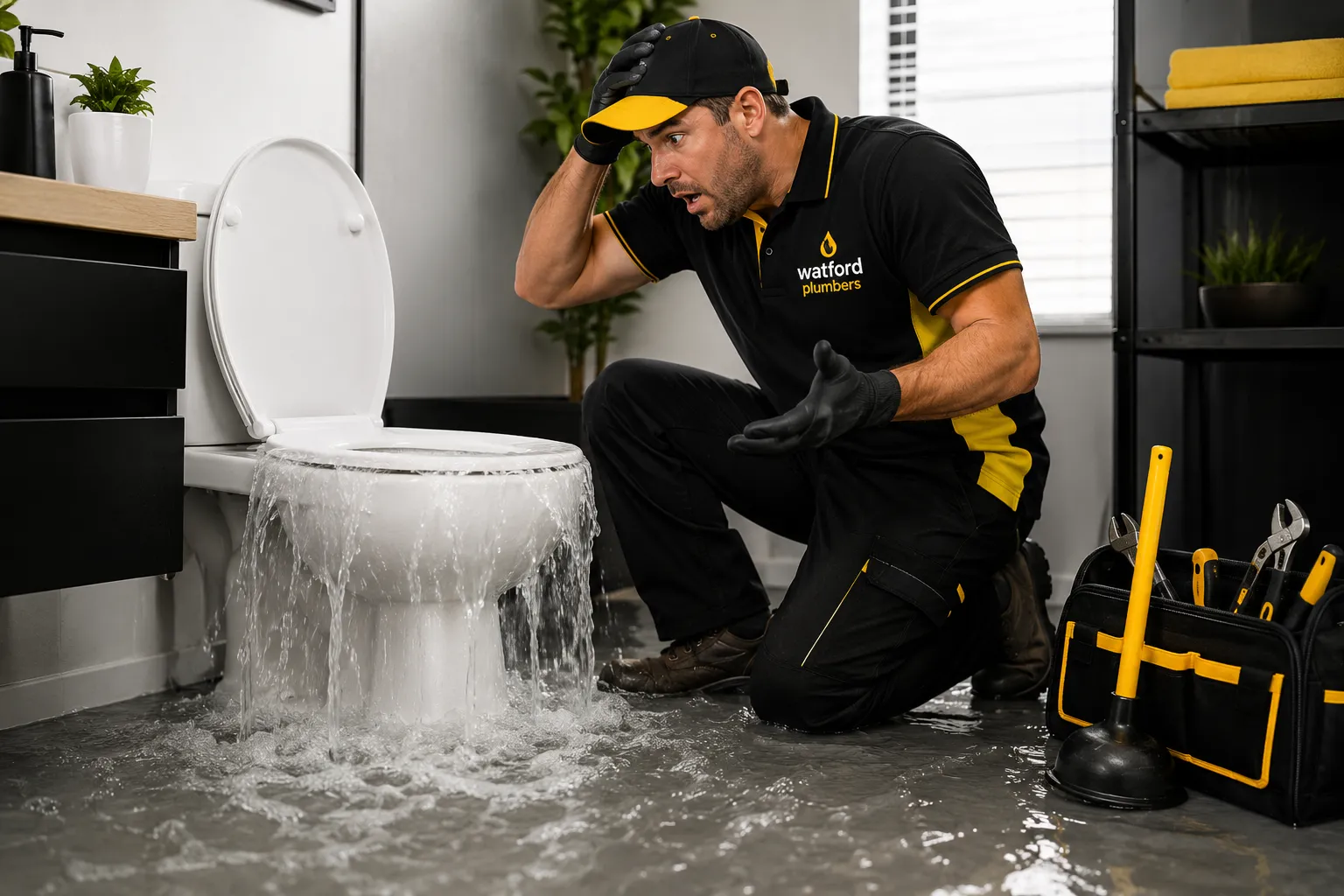
A 1930s semi in Oxhey, WD19, had a toilet that kept running quietly for weeks before anyone acted on it. During a family gathering it overflowed completely, sending water across the bathroom floor and through to the kitchen ceiling below. The repair bill for flooring, plaster, and a new ceiling section came to £620, three times what a same-day call-out would have cost.
Watford Plumbers & Heating Engineers deals with overflowing toilets across WD17 and WD18 every week, and the pattern is almost always the same: a small warning sign gets ignored until the cistern or bowl can no longer cope. Knowing what to do in the first two minutes changes the outcome completely.
This guide walks through the immediate steps to stop a toilet overflowing, the most common causes in Watford homes, and exactly when the problem needs a professional rather than a plunger.
|
Featured Snippet Answer (AEO) If your toilet is overflowing, turn off the isolation valve behind the toilet immediately, or the main stopcock if there is no isolation valve. Do not flush again. Lay towels to contain water, then check for a blockage in the bowl or a stuck float valve in the cistern before attempting to clear it or calling a plumber. |
What Does It Mean When Your Toilet Is Overflowing?
A toilet overflowing means water is rising past the normal bowl level or the cistern is running continuously and spilling over, rather than draining or refilling as it should. This is different from a slow-flushing toilet, which still empties, just gradually.
There are two distinct overflow patterns. Bowl overflow happens during or after a flush, when water rises instead of clearing, usually pointing to a blockage. Cistern overflow happens between flushes, when water constantly trickles or gushes into the overflow pipe, usually pointing to a faulty float valve.
Both patterns need the same first response: stop the water supply before you diagnose anything further.
Watch the water level closely for the first thirty seconds. If it keeps climbing after you stop flushing, treat it as a cistern fault. If it climbed once during the flush and has now stopped, treat it as a bowl blockage. This quick check decides which fix to try first.
|
Tip Quick tip: the isolation valve on most Watford toilets is a small oval or slotted screw-type tap on the pipe behind the cistern, roughly ankle height. A quarter turn clockwise with a flat-head screwdriver or your fingers is usually enough to stop the flow. |
Why Is Your Toilet Overflowing? The Main Causes
Most overflows in WD17 and WD18 properties trace back to one of four causes, and each one needs a different fix.
A blockage in the toilet trap or the pipework beyond it is the most common cause of bowl overflow. Wipes, cotton buds, and excess paper are the usual culprits, and Victorian terraces in Nascot Wood with original clay drainage are particularly prone to this because of narrower, aged pipework.
A stuck or worn float valve inside the cistern causes continuous overflow into the cistern overflow pipe. Watford's hard water, confirmed by Thames Water supply data, deposits limescale on the float valve mechanism over time, causing it to stick open and let water run past the correct shut-off point.

A blocked overflow pipe or vent, less common but more serious, can force water back into the cistern or bowl with nowhere to go. Further along the system, a blocked shared drain or sewer, which is Thames Water's responsibility under the Water Industry Act 1991 rather than the homeowner's, can cause repeated overflows with no obvious cause inside the property.
A worn or perished flush valve seal, less common but worth ruling out, lets water bypass the normal fill cycle and overflow slowly even when the float valve itself is working correctly. This often shows up as a toilet that seems to run intermittently for no clear reason.
Cost tends to follow the cause. A float valve replacement is usually the cheapest fix and often completed within a single visit. A trap or waste pipe blockage costs more if drain rods or a small section of pipework needs attention. A shared sewer issue costs the homeowner nothing directly, since Thames Water covers repairs to the main run once the fault is confirmed and reported.
|
Warning Warning: never pour chemical drain cleaner into an overflowing toilet. If a plumber later needs to work on the pipe with their hands or drain rods, residual chemical can cause burns. It also rarely clears a genuine trap blockage and can damage older enamel or plastic components. |
Toilet Overflow: Symptom, Cause, and Fix at a Glance
|
Symptom |
Likely Cause |
Recommended Fix |
|
Cistern won't stop filling |
Worn or limescale-stuck float valve |
Lift float arm, isolate valve, replace washer or valve |
|
Bowl rises during flush |
Blockage in trap or waste pipe |
Toilet plunger, or drain rods if plunger fails |
|
Overflow after every flush, no blockage found |
Blocked shared sewer beyond property |
Report to Thames Water via a plumber |
|
Water trickles into overflow pipe constantly |
Perished flush valve seal |
Replace flush valve seal or full cistern mechanism |
How to Stop a Toilet Overflowing: Step-by-Step
Follow these steps in order. Speed matters more than diagnosis in the first two minutes. Most Watford homeowners can complete steps one to three themselves in under a minute, even during a busy family gathering or late at night, without any plumbing experience.
1. Stop the water supply. Turn the isolation valve behind or beside the toilet clockwise until it stops. If there is no isolation valve, turn off the main stopcock, usually under the kitchen sink or in the utility room.
2. Do not flush again. A second flush adds more water to an already full system and significantly increases the risk of the overflow reaching the floor or a room below.
3. Contain the water. Lay towels or a shallow container around the base of the toilet. On upper floors, check the ceiling below immediately for early signs of a leak.
4. Check the bowl for a visible blockage. If water is rising in the bowl during flushing, a plunger designed for toilets, not sinks, can often clear a soft blockage in under a minute.
5. Check the cistern. Lift the cistern lid and check whether the float valve has stuck in the open position. Gently lifting the float arm should stop the water flow if this is the cause.
6. Call a plumber if water keeps rising. If the water level does not drop after these steps, or you cannot identify the cause, stop attempting DIY fixes and call an emergency plumber.
When to Call an Emergency Plumber
Call a plumber immediately if the water supply is off but the bowl or cistern is still rising, if sewage or waste is backing up rather than clean water, or if water has already reached a ceiling, wall, or a room below.
Attempting to force a blockage further into the system with excessive plunging or unsuitable tools can push the problem deeper into the pipework, turning a straightforward call-out into a full drain excavation. A qualified plumber has drain rods and, where needed, CCTV inspection equipment to identify the exact point of failure without guesswork.

If the cause turns out to be a shared or main sewer issue rather than your own pipework, Thames Water is responsible for the repair under the Water Industry Act 1991, and a plumber can confirm this distinction and report it correctly on your behalf.
Under Building Regulations Part H, drainage and waste disposal within a property must be installed and repaired to a standard that prevents leaks and blockages recurring. A qualified engineer works to this standard as a matter of course, which matters if you plan to sell the property later and a survey checks the plumbing.
|
Local Coverage Watford Plumbers & Heating Engineers covers WD17, WD18, and the surrounding postcodes with same-day emergency response for overflowing toilets, blocked drains, and burst pipes, seven days a week. |
How to Stop Your Toilet Overflowing in Future
An annual check of the float valve and isolation valve takes a plumber a few minutes and catches limescale build-up before it causes a full stick-open failure. This matters more in Watford than in soft water areas, since Thames Water supply data confirms WD17 and WD18 sit in one of the hardest water zones in the UK.
Only flush human waste and toilet paper. Wipes, even those labelled flushable, do not break down the way toilet paper does and are the single biggest cause of trap and drain blockages in Watford homes, particularly in older Victorian and Edwardian properties with narrower original pipework.
If your toilet has overflowed more than once in the past year, that is not bad luck. It is a sign of an underlying fault that a same-day inspection will usually find and fix before it causes water damage again.
Homes in Nascot Wood and Central Watford with original Victorian and Edwardian pipework benefit most from an annual check, since narrower original clay drainage and older cistern fittings combine to make blockages and float valve failures more likely than in a modern flat near Watford Junction. A short seasonal inspection before winter catches most issues early.
Conclusion
An overflowing toilet becomes an expensive problem the moment water reaches flooring, plaster, or a ceiling below. Acting in the first two minutes, isolation valve first, second flush never, contains the vast majority of cases before real damage happens.
If your toilet is overflowing right now in WD17, WD18, or anywhere across Watford, call Watford Plumbers & Heating Engineers on 07425 281 744 for a same-day emergency response.
|
Get Help Now Toilet overflowing or repeatedly running? Watford Plumbers & Heating Engineers offers same-day emergency call-outs across WD17, WD18, and surrounding postcodes, plus toilet repair and drain unblocking services. Call 07425 281 744 to speak to a local engineer now. |
Frequently Asked Questions
Why is my toilet overflowing even after I stop flushing?
This usually means the cistern float valve has stuck open rather than a flush-related blockage. Water keeps entering the cistern and spilling into the overflow pipe continuously. Turn off the isolation valve behind the toilet, lift the float arm to check if flow stops, and call a plumber if the valve will not reset.
Is it safe to plunge an overflowing toilet myself?
Yes, for a straightforward bowl blockage, using a toilet-specific plunger for under a minute is generally safe. Stop immediately if water is not receding, if the plunger has no effect after a few attempts, or if sewage rather than clean water is present, and call a professional instead.
Who is responsible if my toilet overflows because of a blocked shared sewer?
Thames Water is responsible for shared and main sewers under the Water Industry Act 1991, while homeowners are responsible for pipework within their own property boundary. A plumber can confirm which side the blockage sits on before you report it.
How much does emergency call-out for an overflowing toilet cost in Watford?
A routine daytime toilet unblocking typically costs less than an emergency call-out arranged after hours or during a bank holiday, which can run two to three times higher. Acting quickly during standard hours and isolating the water supply yourself first keeps the final cost down significantly.
Can hard water really cause my toilet to overflow?
Yes. Watford's hard water leaves limescale deposits inside the cistern float valve mechanism over time, causing it to stick open and overflow continuously. An annual valve check by a plumber catches this build-up before it causes a full failure and water damage in your home.
